
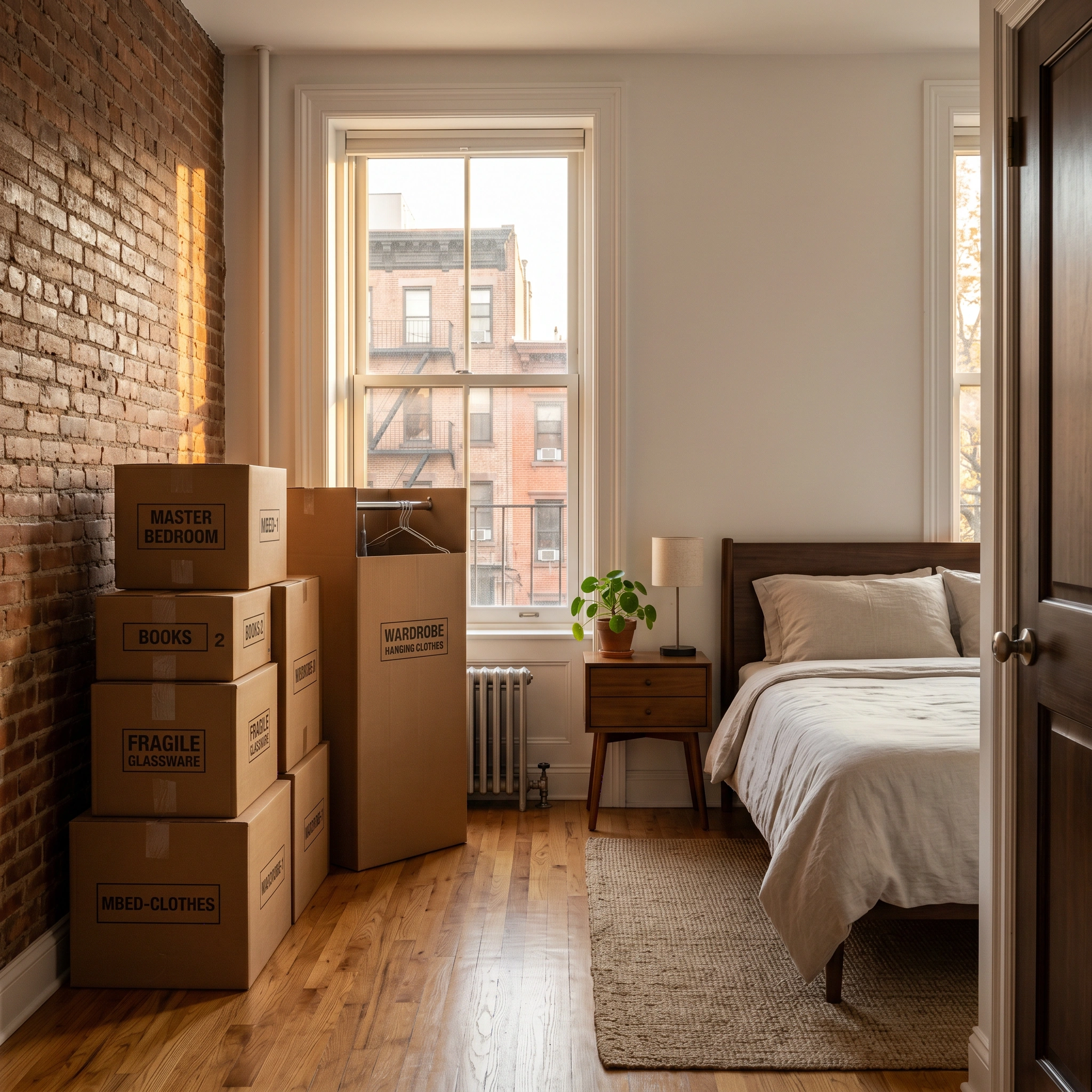
How Much Does It Cost to Move a 1-Bedroom Apartment in NYC?
⚡ Quick Answer
How much does it cost to move a 1-bedroom apartment in NYC?
The cost to move a 1-bedroom apartment in NYC depends on the amount of furniture and boxes, stairs, elevator access, COI requirements, packing services, storage needs, specialty items, move date, and building rules. Bedroom count is only the starting point. The most accurate way to price a 1-bedroom move is to review the real inventory and both building conditions before moving day.
A 1-bedroom apartment is one of the most common NYC moves, but it is also one of the easiest to underquote. Some 1-bedroom apartments are lightly furnished. Others include a full living room, a home office, a large closet system, a packed kitchen, framed art, plants, rugs, and far more boxes than the customer expected.
When customers ask us how much it costs to move a 1-bedroom apartment in NYC, the real answer starts with scope. A mover cannot price the job accurately from the words “one bedroom” alone. The quote should account for the furniture list, box count, pickup access, delivery access, elevator reservations, stairs, COI requirements, packing needs, and whether anything needs special handling.
At Serenity Movers, we see this all the time. Two customers may both say they are moving a 1-bedroom apartment, but one move is a straightforward elevator-to-elevator relocation and the other is a fourth-floor walk-up with a large sofa, a heavy dresser, fragile framed pieces, and a building that only allows moves during a short weekday window. Those are not the same job.
What Changes the Cost of a 1-Bedroom Move?
A one-bedroom move can be priced properly only when the mover understands the full moving environment. The number of rooms matters, but the details inside those rooms matter more.
| Cost Factor | Why It Matters | What to Prepare |
|---|---|---|
| Box count | Boxes affect labor, truck space, loading time, and elevator timing. | Estimate boxes after packing, not before. |
| Furniture volume | Beds, sofas, dressers, desks, tables, and bookcases change the crew plan. | List every large item and note what needs disassembly. |
| Building access | Elevators, stairs, service entrances, long hallways, and loading rules affect timing. | Ask both buildings about move rules before booking. |
| Packing needs | Kitchen packing, wardrobes, fragile items, mirrors, and TVs can add materials and labor. | Decide what you will pack and what the movers should pack. |
Why a 1-Bedroom Apartment Can Cost More Than Expected
A common mistake is assuming that “1-bedroom” means “small move.” In NYC, a 1-bedroom apartment can hold a lot. Closets, storage bins, kitchen cabinets, books, work-from-home equipment, and loose items can add hours of handling if they are not included in the quote.
Customers also often forget about building restrictions. A 1-bedroom apartment in a managed building may require a Certificate of Insurance, elevator pads, freight elevator scheduling, and a specific move window. A 1-bedroom walk-up may require more physical labor even if the inventory is modest.
💡 Serenity Pro Tip: For a 1-bedroom apartment quote, take a short video of every room, every closet, the kitchen cabinets, the elevator or stairwell, and the building entrance. Hidden storage and difficult access are the two biggest reasons 1-bedroom quotes change.
Flat-Rate vs Hourly for a 1-Bedroom NYC Move
Hourly pricing may look attractive for a 1-bedroom apartment, especially when the mover gives a low starting estimate. The risk is that NYC timing is hard to control. If the elevator is delayed, the truck has to park far away, the building staff is not ready, or the move takes longer than expected, the final price can rise.
Flat-rate pricing is often easier for customers who want certainty. The mover reviews the inventory and logistics first, then gives a price for the agreed scope. That does not mean the scope can change without affecting the price. It means that when the information is accurate, the customer has a clearer number before move day.
Real-Life Example: The “Normal” 1-Bedroom That Wasn’t Normal
A recent customer described their move as a normal 1-bedroom apartment. During the video walkthrough, the move turned out to include a sleeper sofa, a large bookshelf, a heavy dresser, several framed pieces, a packed kitchen, and far more boxes than expected. The pickup building had an elevator, but the delivery building had stairs and a tight hallway turn.
Nothing about the move was impossible. But it was not the same as a simple 1-bedroom elevator move. Because the details were reviewed before moving day, the crew could plan properly, the quote could reflect the real work, and the customer avoided a moving-day surprise.
Bottom Line
The cost to move a 1-bedroom apartment in NYC depends on the actual apartment, not just the bedroom count. Furniture, boxes, stairs, elevators, COI requirements, packing, storage, specialty items, building rules, and move date all affect the quote.
Moving a 1-Bedroom Apartment in NYC?
Get a flat-rate quote based on your real inventory, access, COI needs, and move date.
Get My Free Quote →
Call (877) 887-1818
Frequently Asked Questions
How much does it cost to move a 1-bedroom apartment in NYC?
The cost depends on inventory, stairs, elevator access, COI requirements, packing, storage, distance, move date, and building rules.
Why do 1-bedroom moving quotes vary so much?
Because one 1-bedroom apartment may be lightly furnished, while another may include many boxes, heavy furniture, closets, fragile items, and difficult building access.
Should I choose hourly or flat-rate pricing?
Flat-rate pricing is often clearer for NYC apartment moves because timing can be affected by elevators, parking, stairs, and building rules.
Can Serenity Movers quote my 1-bedroom move by video?
Yes. A video quote helps the team review the real inventory and access details before giving a flat-rate price.
