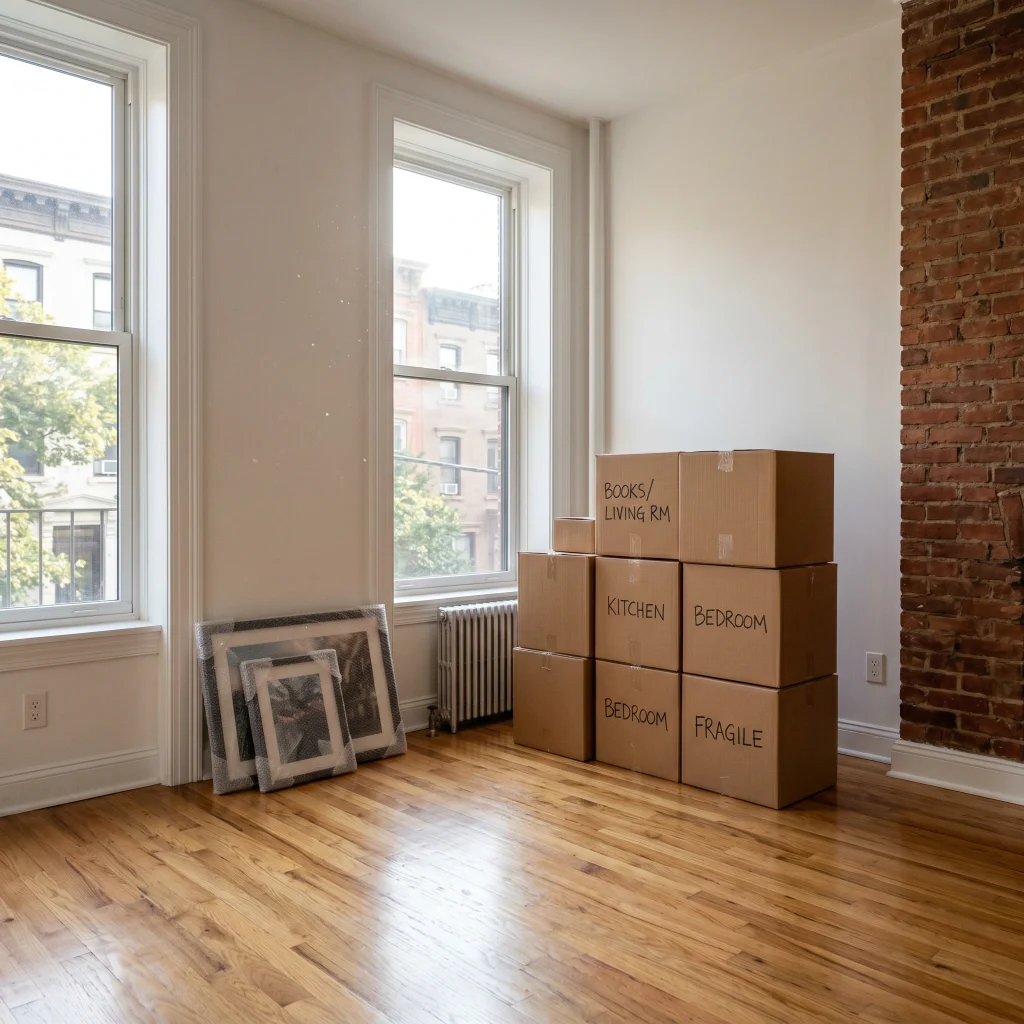

How Much Do Movers Cost in NYC?
⚡ Quick Answer
How much do movers cost in NYC?
Movers in NYC can cost anywhere from a few hundred dollars for a small, simple local move to several thousand dollars for a larger apartment, full packing service, walk-up building, storage move, or complex building relocation. The final price depends on inventory, stairs, elevators, COI requirements, parking access, packing, specialty items, distance, and move date. Serenity Movers provides flat-rate quotes based on the real scope of the move, so customers know the price before moving day.
If you are asking how much movers cost in NYC, the most important thing to know is that price is not based on apartment size alone. A one-bedroom elevator move, a fifth-floor walk-up, a same-building move, and a move with storage can all look similar online but price very differently in the real world.
The short answer is this: NYC moving costs depend on the actual move. That includes how much you own, how difficult the building access is, whether your building requires a Certificate of Insurance, how far the truck can park from the entrance, whether the movers need to pack for you, and whether the move involves storage, delicate items, or multiple stops.
Customers ask us this question all the time because online moving prices can be confusing. One company gives a low hourly estimate. Another gives a higher flat-rate price. A third asks for a video walkthrough before giving any number at all. The difference usually comes down to scope.
At Serenity Movers, we price NYC moves around the actual inventory and building logistics, not just the bedroom count. That is especially important in New York City, where a short local move can still involve elevator reservations, strict move windows, stairs, narrow hallways, and building paperwork.
What Is the Average Cost of Movers in NYC?
The average cost of movers in NYC depends on the size and complexity of the move. A small local studio move is usually at the lower end. A larger apartment, a walk-up, a long carry, full packing, storage, or a building with strict rules will cost more.
For planning purposes, most customers should think in ranges, not fixed numbers. A quote for a NYC move should only be trusted after the mover understands the inventory, building access, timing, and service level.
| Move Type | Typical Cost Direction | What Changes the Price |
|---|---|---|
| Studio apartment | Usually the lowest-cost apartment move when access is simple. | Box count, sofa size, elevator access, stairs, and packing. |
| 1-bedroom apartment | Often a moderate local move, but it varies widely. | Furniture volume, disassembly, closets, boxes, elevator windows, and COI. |
| 2-bedroom apartment | Usually needs more crew planning and more truck space. | Extra rooms, home office items, kids’ furniture, fragile items, and storage closets. |
| Walk-up move | Often costs more than a similar elevator move. | Floor level, narrow stairwells, heavy furniture, and number of boxes. |
| Move with packing or storage | Usually higher because it adds labor, materials, handling, and coordination. | Full packing, fragile packing, storage time, redelivery, and second building approval. |
These are planning guidelines only. The actual price should be based on a detailed quote for your specific NYC move.
Why NYC Movers Can Be More Expensive Than Expected
NYC movers are not only moving furniture from one address to another. They are also managing city logistics. That is the part many online cost calculators miss.
A simple move in another city may involve a driveway, a garage, and easy truck access. In New York City, the crew may need to work around alternate side parking, a service entrance, a freight elevator, building staff, COI paperwork, tight hallways, and a move window that closes at a specific time.
That coordination affects the quote. It determines how many movers are needed, how much time the job may take, what materials are required, and how carefully the move has to be staged.
💡 Serenity Pro Tip: Before asking for a price, collect your building move rules. Ask about COI, elevator reservations, loading dock access, allowed move hours, and floor protection. Those details can affect the quote as much as the furniture list.
What Factors Affect the Cost of a NYC Move?
The final moving price usually comes down to labor, time, risk, materials, truck space, and coordination. The more complex the move, the more important it is to get a detailed quote before booking.
The most common cost factors include:
- Apartment size – studio, one-bedroom, two-bedroom, townhouse, or larger home.
- Inventory volume – furniture, boxes, wardrobes, rugs, lamps, art, mirrors, and loose items.
- Building access – elevator, freight elevator, walk-up, service entrance, or long hallway.
- Stairs – especially third-floor, fourth-floor, and fifth-floor walk-ups.
- COI requirements – common in NYC condos, co-ops, managed rentals, and luxury buildings.
- Packing services – full packing, partial packing, kitchen packing, fragile packing, or wardrobe boxes.
- Furniture disassembly – beds, tables, sectionals, shelving, or oversized pieces.
- Specialty items – pianos, antiques, fine art, mirrors, safes, or delicate electronics.
- Move date – weekends, end-of-month dates, and peak season are often more competitive.
- Storage needs – especially if move-out and move-in dates do not line up.
Flat-Rate vs Hourly Pricing: Which Is Better in NYC?
Hourly movers may look cheaper at first because the estimate starts with a low number. But in NYC, hourly pricing can become stressful if the move takes longer than expected. Traffic, parking, elevator delays, long carries, and building rules can all add time.
Flat-rate pricing works differently. The mover reviews the inventory and logistics before the move, then gives one agreed price for the defined scope. For many NYC customers, that is easier to understand because the price is not rising every time the elevator is slow or the truck has to park farther away.
At Serenity Movers, customers often choose flat-rate pricing because they want clarity. The quote is built around what is actually moving, where it is moving from and to, and what building requirements need to be handled.
Real-Life Example: Why Two One-Bedroom Moves Can Cost Different Amounts
A recent customer asked why their one-bedroom move cost more than a friend’s one-bedroom move. On paper, both were one-bedroom apartments in Manhattan. In reality, the jobs were very different.
The friend had an elevator building, light furniture, a small box count, and a flexible delivery window. The customer had a fourth-floor walk-up, a large sofa, several book boxes, a strict destination elevator window, and a building that required a COI before the move could begin.
That is why bedroom count alone is not enough. The cost of movers in NYC depends on the actual work required. Two apartments with the same number of bedrooms can require very different crew planning.
How to Get a More Accurate NYC Moving Quote
The best way to get an accurate moving quote is to make the move easy to understand before the quote is issued. A vague inventory creates a vague estimate. A clear inventory creates a cleaner price.
Before requesting a quote, prepare:
- Pickup and delivery addresses
- Apartment size and floor number
- Elevator or stair details
- Building COI requirements
- Move date and backup dates
- Approximate number of boxes
- Large furniture list
- Photos or video of the apartment
- Packing needs
- Storage needs
- Specialty or fragile items
🎥 Want a cleaner number? Start with a Serenity Movers video quote. A short walkthrough helps the team review your inventory and build a flat-rate price around the real move.
How to Avoid Surprise Moving Costs
Surprise costs usually happen when the quote does not match the move. Sometimes the customer forgets to mention extra boxes. Sometimes the building requires paperwork. Sometimes the sofa does not fit through the hallway without disassembly. Sometimes the truck cannot park near the entrance.
To avoid this, ask direct questions before booking:
- Is this quote flat-rate or hourly?
- What exactly is included?
- What is not included?
- Does the quote include stairs?
- Does the quote include a COI?
- Are packing materials included?
- Is furniture disassembly included?
- What happens if I add items later?
- What happens if the elevator is delayed?
- What is the cancellation or rescheduling policy?
Bottom Line
The cost of movers in NYC depends on the real scope of the move, not just the apartment size. A small move can become more expensive if it involves stairs, difficult parking, packing, storage, or strict building rules. A larger move can be smoother when the building access is simple and the inventory is clear.
The safest way to price a NYC move is to request a detailed quote based on inventory, access, COI requirements, packing needs, and timing. Serenity Movers uses flat-rate quotes so customers can understand the cost before moving day and avoid hourly uncertainty.
Ready to Find Out What Your NYC Move Will Cost?
Get a flat-rate quote based on your real inventory, building access, COI needs, and move date.
Get My Free Quote →
Call (877) 887-1818
Frequently Asked Questions About NYC Moving Costs
How much do movers cost in NYC?
Movers in NYC can cost from a few hundred dollars for a small, simple local move to several thousand dollars for a larger apartment, packing-heavy move, storage move, or complex building relocation. The actual price depends on the details of the move.
Why are NYC movers so expensive?
NYC movers can be more expensive because moves often involve building rules, elevators, COI paperwork, limited parking, stairs, narrow hallways, long carries, and strict move windows. These logistics affect labor, time, and planning.
Is a flat-rate quote better than an hourly quote?
For many NYC moves, yes. A flat-rate quote gives the customer a clearer price before moving day, while hourly pricing can increase if traffic, parking, elevator delays, or building issues slow down the move.
Do movers charge more for stairs in NYC?
Stairs can affect the quote because they increase labor and time. The impact depends on the floor, stairwell width, furniture size, box count, and whether heavy or fragile items are involved.
What information should I give movers before getting a quote?
Give the mover both addresses, apartment size, floor number, elevator or stair details, building rules, COI requirements, inventory, box count, packing needs, storage needs, and any specialty items.
How can I avoid hidden fees when hiring movers in NYC?
Ask what is included, what is excluded, whether stairs and COI are included, whether packing materials cost extra, how inventory changes are handled, and whether the quote is flat-rate or hourly.
Does Serenity Movers offer flat-rate moving quotes?
Yes. Serenity Movers offers flat-rate moving quotes based on the inventory, building logistics, access details, and services needed for the move.
Can I get a quote without an in-home visit?
Yes. Serenity Movers offers video quotes so customers can show the apartment, furniture, boxes, and access details without scheduling an in-home visit.
Request your free quote today or call (877) 887-1818 to speak with a Serenity Movers specialist.
More Questions From This Moving Guide
Continue with related moving questions from the same guide.